The Whys and Hows of Wildlife Watching
By Jessica Aiello, Pennsylvania Parks & Forests Foundation
“The natural world is astounding, and time spent in it can make you feel wonderful. You only need to stop, look around, and listen to experience awe for yourself.”
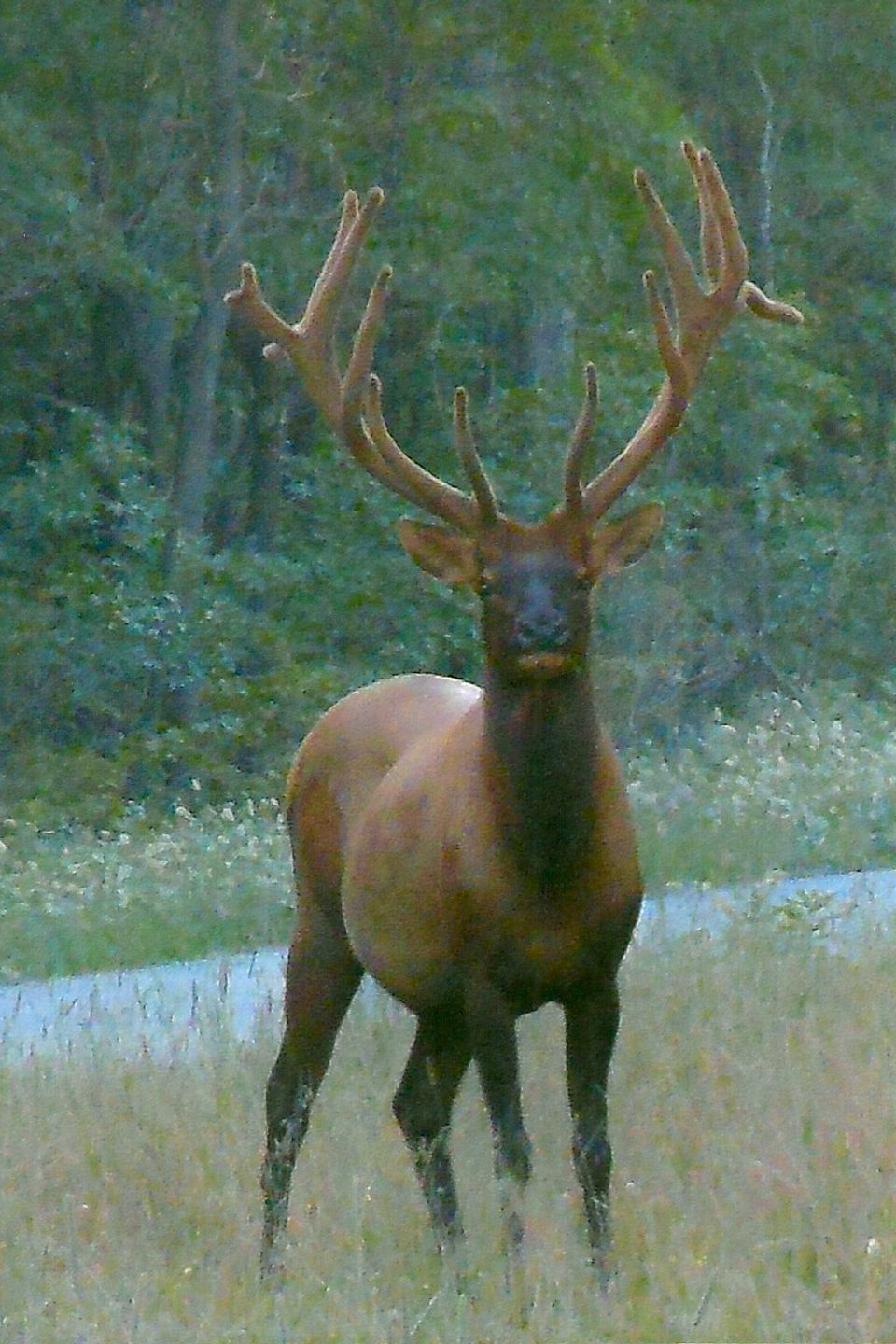
Those sentiments from the president of the Pennsylvania Parks and Forests Foundation (PPFF), Marci Mowery, are shared by experts across the country. Their research shows that spending time outdoors – whether watching wildlife, taking a hike, or paddling down a river – provides us with many physical, mental, and emotional health benefits. When we pause to observe a bald eagle dive for a fish or watch a white-tailed deer stop to nibble some grass, our usually busy minds can relax. If we are lucky enough, we might even experience a sense of awe.
“Awe,” which is defined as “a feeling of reverential respect mixed with wonder,” has been shown, both anecdotally and scientifically, to have many health benefits. Studies done by the University of California, Berkeley found that people felt a greater sense of well-being and less stress after experiencing awe in nature. Awe can help regulate bodily functions, slow heart rate, aid digestion, and deepen breathing. One of the study’s authors, Craig Anderson, said, “Nature is one of the most common and powerful ways people experience awe in their daily lives.”
So if you want to achieve these benefits, how do you get started?
Pennsylvania is home to 480 species of wild birds and mammals, according to the Pennsylvania Game Commission, so the opportunities to view wildlife are plentiful. However, before you get started, there are a few things to consider.
“For most wildlife, humans are seen as predators, so it can be difficult to get good views without them noticing and avoiding you,” said Matt Schenck, environmental education specialist at Sinnemahoning State Park in Cameron and Potter counties.
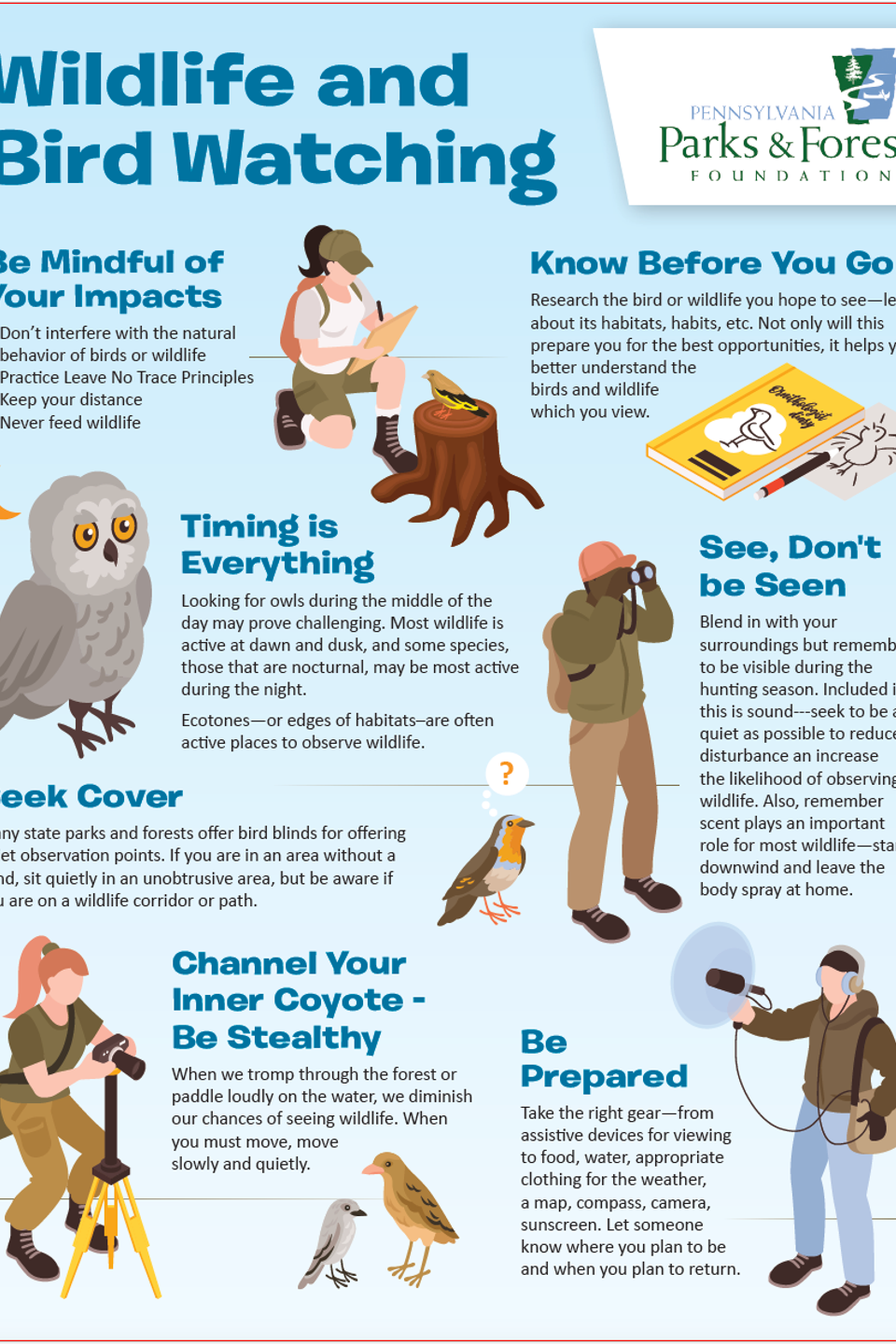
Schenck recommends viewing wildlife from afar with the aid of binoculars or a spotting scope so that you go unnoticed. However, expensive equipment isn’t a requirement. “A little patience can go a long way,” he added. “Setting yourself up in an area where you anticipate wildlife being and then staying still or moving very little can be a good way to blend into the environment.”
The Pennsylvania Game Commission asks wildlife watchers to always be respectful of wildlife, particularly during nesting and denning seasons. That means never trying to touch or move any wildlife, especially young that might look to be abandoned by their parents. (Quick tip: They are usually not abandoned, just left alone while the adult searches for food.) Also, don’t feed wildlife, as this can often harm them and create potentially dangerous dependencies. Wildlife should be viewed from as far away as possible to protect both them and you.
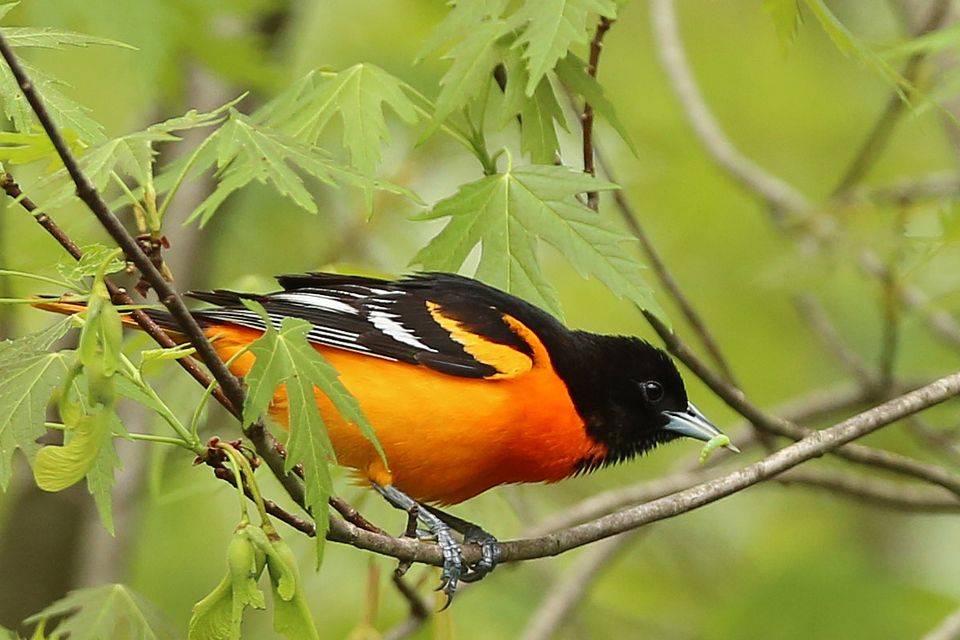
When looking for suitable places to watch wildlife, it is best to go where others aren’t. The more people present, the more skittish the wildlife is likely to be. However, sitting patiently at a backyard bird feeder, especially during spring and fall migrations, can be a great way to spot multiple species of birds at one time without having to travel far. If you do choose to seek out the more remote locales, consider taking the advice of Aura Stauffer, a wildlife biologist with the Pennsylvania Bureau of Forestry: “Go get a map, a GPS or smartphone app, and a compass (yes, a compass), and then pick a trail on the map that looks interesting. Make your own adventures while using Leave No Trace principles. Who knows what wildlife you’ll discover!”
Those are certainly words of wisdom to consider, coming from someone who certainly knows her wildlife! However, if the thought of trudging into the woods without a bit more guidance is daunting to you, you can also look for wildlife-watching opportunities on the Pennsylvania Department of Conservation and Natural Resources (DCNR) website, www.pa.gov/agencies/dcnr, or at www.visitpa.com/blog/post/wildlife-watching-pennsylvania.
“Pennsylvania’s state parks and forests, as well as our other public lands, provide so many wonderful opportunities to view wildlife,” added Mowery. “If done in a quiet and respectful manner, wildlife watching can be an awe-inspiring activity for people of all ages, with physical and mental benefits that can last a lifetime.”
“The natural world is astounding, and time spent in it can make you feel wonderful. You only need to stop, look around, and listen to experience awe for yourself.”
Those sentiments from the president of the Pennsylvania Parks and Forests Foundation (PPFF), Marci Mowery, are shared by experts across the country. Their research shows that spending time outdoors – whether watching wildlife, taking a hike, or paddling down a river – provides us with many physical, mental, and emotional health benefits. When we pause to observe a bald eagle dive for a fish or watch a white-tailed deer stop to nibble some grass, our usually busy minds can relax. If we are lucky enough, we might even experience a sense of awe.
“Awe,” which is defined as “a feeling of reverential respect mixed with wonder,” has been shown, both anecdotally and scientifically, to have many health benefits. Studies done by the University of California, Berkeley found that people felt a greater sense of well-being and less stress after experiencing awe in nature. Awe can help regulate bodily functions, slow heart rate, aid digestion, and deepen breathing. One of the study’s authors, Craig Anderson, said, “Nature is one of the most common and powerful ways people experience awe in their daily lives.”
So if you want to achieve these benefits, how do you get started?
Pennsylvania is home to 480 species of wild birds and mammals, according to the Pennsylvania Game Commission, so the opportunities to view wildlife are plentiful. However, before you get started, there are a few things to consider.
“For most wildlife, humans are seen as predators, so it can be difficult to get good views without them noticing and avoiding you,” said Matt Schenck, environmental education specialist at Sinnemahoning State Park in Cameron and Potter counties.
Schenck recommends viewing wildlife from afar with the aid of binoculars or a spotting scope so that you go unnoticed. However, expensive equipment isn’t a requirement. “A little patience can go a long way,” he added. “Setting yourself up in an area where you anticipate wildlife being and then staying still or moving very little can be a good way to blend into the environment.”
The Pennsylvania Game Commission asks wildlife watchers to always be respectful of wildlife, particularly during nesting and denning seasons. That means never trying to touch or move any wildlife, especially young that might look to be abandoned by their parents. (Quick tip: They are usually not abandoned, just left alone while the adult searches for food.) Also, don’t feed wildlife, as this can often harm them and create potentially dangerous dependencies. Wildlife should be viewed from as far away as possible to protect both them and you.
When looking for suitable places to watch wildlife, it is best to go where others aren’t. The more people present, the more skittish the wildlife is likely to be. However, sitting patiently at a backyard bird feeder, especially during spring and fall migrations, can be a great way to spot multiple species of birds at one time without having to travel far. If you do choose to seek out the more remote locales, consider taking the advice of Aura Stauffer, a wildlife biologist with the Pennsylvania Bureau of Forestry: “Go get a map, a GPS or smartphone app, and a compass (yes, a compass), and then pick a trail on the map that looks interesting. Make your own adventures while using Leave No Trace principles. Who knows what wildlife you’ll discover!”
Those are certainly words of wisdom to consider, coming from someone who certainly knows her wildlife! However, if the thought of trudging into the woods without a bit more guidance is daunting to you, you can also look for wildlife-watching opportunities on the Pennsylvania Department of Conservation and Natural Resources (DCNR) website, www.pa.gov/agencies/dcnr, or at www.visitpa.com/blog/post/wildlife-watching-pennsylvania.
“Pennsylvania’s state parks and forests, as well as our other public lands, provide so many wonderful opportunities to view wildlife,” added Mowery. “If done in a quiet and respectful manner, wildlife watching can be an awe-inspiring activity for people of all ages, with physical and mental benefits that can last a lifetime.”